Sunday, 31 January 2016

Colour Psychology

Colour Psychology
Does it ever occur to you why headlines are often in bold and red? Just because every copywriter is doing it doesn't mean you have to follow, but there are meanings behind the use of various colors that accentuate words in a copy.

Black: seriousness, distinctiveness, boldness, power, sophistication, tradition

Blue: authority, dignity, security, faithfulness, heritage, corporate stability, trust

Brown/gold: history, utility, earthiness, richness, tradition, conservative

Gray: somberness, authority, practicality, corporate mentality, trust

Green: tranquility, health, freshness, stability, appetite

Orange: fun, cheeriness, warm exuberance, appetite, speed

Pink: femininity, innocence, softness, health, youth

Purple: sophistication, spirituality, wealth, royalty, youth, mystery

Red: aggressiveness, passion, strength, vitality, fear, speed, appetite, urgency

White: purity, truthfulness, faith, contemporary, refined, wealth

Yellow: youth, positive feelings, sunshine, cowardice, refinement, caution, appetite

Hope today's post on colour psychology gives you some ideas how to further enhance your marketing message.

Friday, 29 January 2016

10 Essential Google AdWords Tips

10 Essential AdWord TipsIf you are doing e-commerce or exploring lead generation via PPC marketing, some AdWords tips can help get the ball rolling for you. Making money with Google AdWords is very easy, and yet most people fail miserably at it! Using AdWords effectively requires a precise combination of art and science. You should be able to get that creative edge on your competitors, and you should also be able to manipulate the numbers game!
Designing The Ad
  • Be specific. This is the most important of all AdWords tips that you'll get. You only want clicks that can convert to sales. So be specific in the headline of your ad. If you sell floral pattern bed sheets, mention the entire thing in the heading. You don't want people looking for geometric patterned sheets clicking through!
  • What's-In-It-For-Me. Yes, tell the customer how they would benefit by using your product. Find out what they need, and then provide it to them.
  • USP. What makes your product unique? What is the advantage in choosing your product over any other brand?
Keyword Selection
  • Cost. Most articles on AdWords tips will tell you about finding a balance between the popularity of keywords and their CPC. Sometimes incorrect spellings can also get you an abundance of targeted traffic while keeping the CPC low.
  • Targeted traffic. For exact keyword phrases, use quotes and square brackets, like NYC Theatre Tickets or [Lion King Broadway Tickets].
  • Freebie hunters. Use -free to keep them away as they aren't likely to result in any sales.
The Extra Edge
  • Own website. What most articles on AdWords tips fail to tell you is that it is also important to have your own website, with a proper opt-in form so that you can build a mailing list of all visitors. People who don't buy now can change their minds later.
  • Landing page. It is better to have a separate landing page for each of your products, just like a separate ad for each of them. This ensures a better customer experience and makes it easier for you to track the individual conversion rates of products.
Number Crunch!
  • Budget. Another hard-to-find point in the most common AdWords tips lists! You need to make a budget, as to how much you can bear to spend per sale, and then stick to it.
  • Profit. Ascertain your profit/sale. Then use that data to work upon decreasing cost or increasing sale, so as to reach the desired profit.
So that's about it! The above 10 AdWords tips can help you get your profits rocketing up. Oh, did I miss the eleventh one? Well, the last tip in my list is Testing. You can simply never have enough of it. You need to keep testing and re-testing; keep changing a word here and a phrase there; keep improving! And don't forget to enjoy the experience!

Thursday, 28 January 2016

Is The Best Place To Put A Call-To-Action Really Above The Fold?

Numerous authorities and experts in blogging commonly recommend placing call-to-action buttons "above the fold" for best results. Originating from the newspaper industry, businesses used this principle in their website design for two major reasons:

1. Slower Internet speeds and computer processing power
2. User awareness of scrolling behaviour on web pages

These factors required businesses to be selective of the content they placed on their web pages to maximise the audience they would receive.

What is the "Fold"?

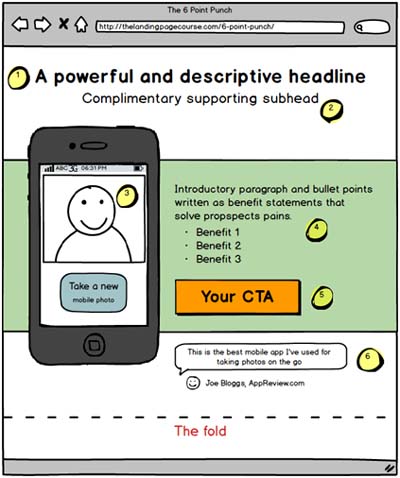
"The fold" is the space where your web page is viewable to your user without having to scroll down. Heatmap studies indicate visitors spent 80% of their time focusing on the content above the fold. Although website visitors do scroll down the page, viewing time of the page decreased sharply when they went below the fold.

According to best practices, keeping vital information above the fold ensures users see your call-to-action button and quickly understand your page. Anything "below the fold" will only be viewed by 50% of people who visit your page.


Image: Landing page setup according to best practices | Source: The Landing Page Course

These analyses suggest keeping your CTAs "above the fold" would do best.

CTAs Below The Fold

But what if I told you CTAs below the fold can work just as well as those above the fold, if not better?

Marketers have also created successful CTAs that depart from the "above the fold" best practices. In the same heatmap study, people can be motivated to continue reading down a page if:

1. The layout encourages scanning
2. The initially viewable information makes them believe it will be worth their time to scroll.

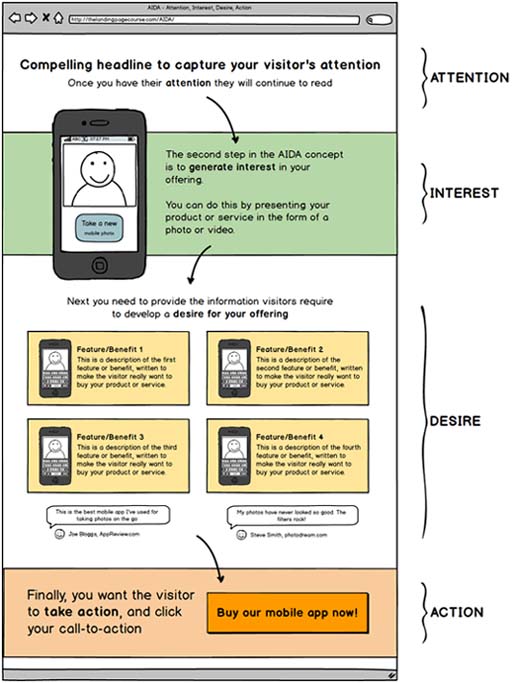
The AIDA model; or attention, interest, desire and action are four factors your website visitors consider when making a decision to take action as they interact with your professional landing page.
  • Attention: Capturing attention of your visitor with a relevant and punchy headline
  • Interest: Generate interest with smart copy or a well-placed video or visuals
  • Desire: Create desire by using features and benefits to appeal to your visitor"s needs
  • Action: A strong CTA to complete the marketing story the other 3 elements were setting up. To convince your visitor your solution is the best suited to meet their needs
The AIDA format allows your professional landing page to tell a story aided by crisp design, smart copy and clearly indicated navigation to guide visitors to continue reading.


Image: Landing page setup according to AIDA formatting | Source: The Landing Page Course

Benefits of below the fold CTAs

High-speed Internet, touchscreen devices and increased computer processing power have made scrolling become second nature. Therefore, do CTAs really need to be above the page fold?

CTAs below the fold allow you more room to explain complex products offers. Sufficiently addressing visitor"s queries and doubts in your landing page ensures they are excited and ready to click the CTA button when they reach the bottom of the page.

If visitors don't understand your product or have doubts, they're not likely keen to buy your product.

Positioning the CTA lower on the page can work better to give prospects time and space to digest the information needed to make an informed decision.

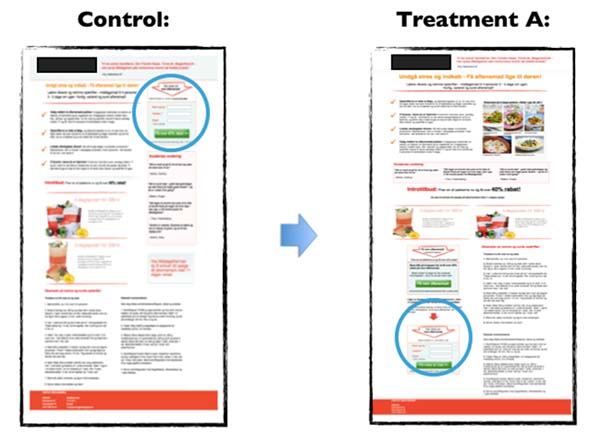
In an A/B testing of two Boston Globe sign up pages; with the control CTA above the fold and the alternative CTA below the fold, testers found no significant differences between the two treatments.

In another example by Content Verve, moving the CTA below the fold increased conversions by 304% (Control) than a CTA above the fold (Treatment A). These results have been replicated by Certified Knowledge.


Source: Instapage

So why is "above the fold" still considered best practice in landing page design?  Below the fold CTAs can perform just as well as CTAs above the fold, if not better.

Ideal CTA Placement Depends on Your Offer Complexity

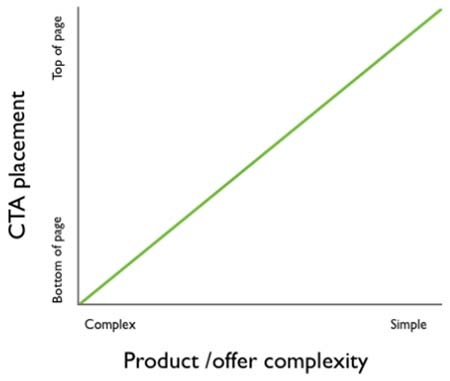
The below graph by KISSmetrics illustrate the correlation between the complexity of your offer and the best place on your professional landing page to put your CTA.


Source: KISSmetrics

Placing the CTA above the fold works best if the product offer is simple and the prospect does not have to do a lot of thinking to make an informed decision.

Alternatively, CTAs below the fold work better if the product offer is complex. Prospects may have more questions that need to be either explained in your landing page copy or thought over before making an informed decision.

Rushing to convince your prospects can be counterproductive. Asking for a commitment before establishing the value of the offer to your prospect will kill your conversion rates. Ultimately, your conversion rates are influenced by how motivated your prospects are to click your CTA.

Page scrolling is now second nature to consumers but they are also becoming more discerning. Marketers should consider if their CTAs are positioned where they are sufficiently compelling such that prospects are motivated to take action, rather than worrying about placing CTAs above or below the page fold. Thorough A/B testing of your landing page will help to find out what is best for your offer promotion.

Wednesday, 27 January 2016

The 8 Rules Of Optimizing Your Article For SEO

The 8 Rules Of Optimizing Your Article For SEO
Being skilled as an SEO writer or content marketer is very helpful for anyone who wants their articles to be easily discovered through the search engines, apart from the fact that it is a smart, in-demand career move. No doubt it takes much experience and knowledge of the subject matter to write an authoritative and value-adding article but SEO itself actually takes little effort. If you know what keywords to target and where to position them in your article, you will attract the right kind of visitors and enrol them as sales leads on your website. Do it once and your highly ranked article does its job 24/7.

There are 5 aspects to optimizing your article:

1. Title Or Headline
2. Keyword Research
3. Keyword Density
4. Content
5. Images

Title Or Headline

Your title can make or break your SEO article writing. It goes without saying that your title must be attractive to potential readers, otherwise your whole article will be ignored. But the title must also be made attractive to search engine spiders with targeted keywords. The right keywords not only determine the article's search ranking placement, but also affect the click-through rate from the search listing to it.

Keyword Research

Keyword research is a fundamental step to identifying those targeted keywords you want. By using the Google Keyword Planner, you can discover for each suggested keyword or phrase the monthly search volume, the competition level and bid value.

However, recent development in keyword research technology is giving clarity to the fact that many SEO practitioners and digital marketers are mistaken for directly inferring the statistics generated by the Planner for SEO purposes, because all along, those statistics are derived from PPC research data (read "Google's Keyword Tool versus HubSpot's Keyword Grader").


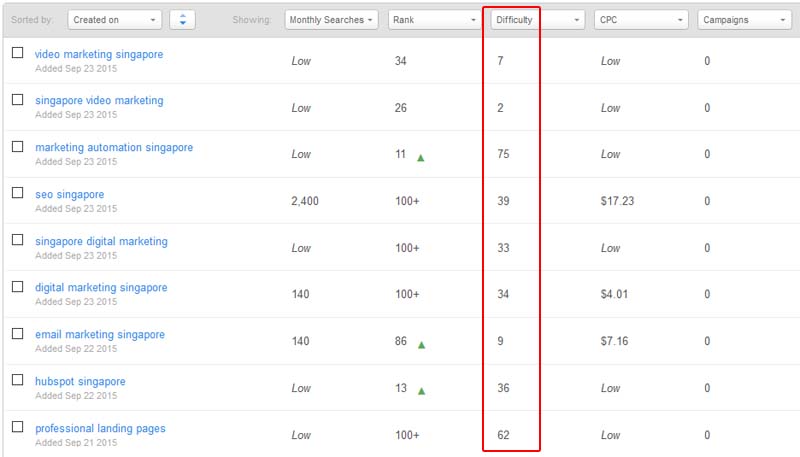
HubSpot and a few other similar technology firms have come up with a new metric called "Keyword Difficulty" which gives a single number between 1 and 100, and this number settles once and for all how difficult it is for your web page to rank on the first page of search engine results for a particular keyword. The higher the number, the more difficult it is to rank well. The magic number is 40 or less.

Keyword Density

Keyword density refers to the number of times a keyword or phrase is repeated in your article. Keyword repetition helps to accentuate the main theme of the article, but too much repetition constitutes keyword stuffing and reduces the "human touch".

It is recommended that the keyword appears in the first paragraph and a total of at most 3 times throughout an article of moderate length.

Great Content

Nonetheless, a great article is still written for the benefit of an audience first and foremost. When your content resonates with readers, they will be motivated to learn more about your business, opt-in to your newsletter, bookmark your site or share it with their connections. That's referral traffic for you.

First write your article with your audience in mind. When it is completed, edit it for SEO.

Images

When you have an image in your SEO article, it's crucial to insert the image alt-tags, e.g. when you insert a happy face in your article, the alt-tag could be <img src="happy.gif" alt="happy face">. This gives you an opportunity to include choice keywords so that the Google search engine can index and rank your image in Google Images based on the keywords.

The 8 Rules Of Optimizing Your Article For SEO

1. Make sure the keyword's difficulty metric is 40 or less (Use HubSpot Keyword module to check).
2. Include keyword in the title.
3. Include keyword in the article page URL (automatically generated by the blogging system).
4. Include keyword in the meta description.
5. Include keyword in the first paragraph.
6. Repeat the keyword 2 more times in the article.
7. Include keyword in the image alt-tag.
8. Include at least 1 related internal link.

Related article: 4 Top Search Ranking Factors To Pay Attention To

Tuesday, 26 January 2016

Email Marketing Singapore: Why Your Business Needs An Opt-In Subscription Strategy

Email is big. Really big.

Did you know marketers sent out over 838 billion emails in 2013 alone? That's more than 100 times of the world's total population. Isn't that astounding?

Email marketing in Singapore has defied countless predictions of its impending death in the face of social media marketing's growing popularity.

Email marketing is a powerful tool in an Inbound marketer's arsenal for sales lead generation. Compared to other marketing techniques, it drives better return on investment (ROI) and customer engagement. According to HubSpot Singapore, 74% of consumers prefer to receive commercial communications through email. 66% of consumers have also made a purchase online as a result of an email marketing message.

Email marketing also performs well on another emerging platform—mobile devices. Mobile email accounts for 15-70% of email opens, depending on target audience, product and email type.
Email is not dead, but like any other marketing tool, email can also backfire if not used correctly.
Email marketing has often been mistaken or used for spam. Laws against spam were enacted in several countries like the Spam Control Act in Singapore and the CAN-SPAM act in the US. Knowing the difference between spam emails and opt-in emails can affect whether your emails get through spam filters.

Email Marketing Singapore: Why Your Business Needs An Opt-In Email Subscription Strategy

What is Spam?

"But wait", you may be thinking. "I'm not trying to phish information or send out inappropriate messages. Do my marketing emails look like spam?"

If you are sending a batch of emails promoting your latest products to people who never asked to receive them from you, you are most definitely sending spam.

Email spam is any email that meets the following 3 criteria:
  • Anonymity: Address and identity of the sender is concealed
  • Mass mailing: The email was sent to large groups of people
  • Unsolicited: The email is not requested by the recipients
These issues are even more apparent when you rely on purchased email lists for your email marketing. People on such lists don't know who you are and have not opted in to receive your emails organically.


Why Is Spam Bad?

Spam damages your business's reputation when you consistently blast out emails to people who never asked to receive them.

People who see such emails in their inbox will either mark it as spam or delete it. Your company may also get hordes of complaints from people for wasting their time opening your unsolicited emails. This gets you into trouble with Internet Service Providers and can get your email and IP addresses blacklisted. Or worse still, you could get jailed for it.

The truth is spamming mass emails to an email list is an inefficient use of your time and resources. People are wising up to spam emails. The share of spam in email traffic has been steadily decreasing over the years.


How To Prevent Your Emails From Being Classified As Spam

1. Opt-in Email Subscription

Allowing your prospects to opt-in your email marketing campaigns can minimise the issues surrounding spam marketing. Obtaining consent from leads to receive email communication from your company ensures your marketing messages get into the inboxes of the people who want to see them.

There are a myriad of advantages for B2B lead generation to this approach, including:
  • Protect your company's reputation
  • Build healthy relationships with customers
  • Provide targeted and personalised messages to prospects who are interested in your company
  • More effective use of your marketing time and resources
An opt-in email strategy ensures you generate the most qualified and interested leads from your email campaigns.

2. Double Opt-In Email Subscription

If single opt-in is good, double opt-in is arguably more effective for qualified sales lead generation.

In double opt-in, which is a misnomer, potential subscribers need to confirm their subscription request after filling in their names and e-mail addresses on the landing page. While this makes your potential subscriber do more work initially and can reduce the number of subscribers, it ensures your subscribers want to subscribe to the list. With double-opt in, you can attract higher quality and more targeted sales leads.

A double opt-in procedure also protects your email list. If this second layer of protection is not available, anyone can enter any email address to sign-up another person. This worsens the quality of your email list and makes it vulnerable to spam bots. Using a double opt-in approach, you ensure the quality of your email list remains high and reduce its decay rate.

Why would visitors want to subscribe to your list? Because you provide valuable content that solves your visitors' problems. Your expertise in a subject matter and your ability to address your visitors' concerns will attract them to your website. Thus, acquiring email subscribers organically through consistent content creation is a viable long-term strategy. This allows for more targeted marketing messages to be sent out and minimises "report as spam" complaints from your subscribers.

Sunday, 24 January 2016

8 Feasible Instagram Marketing Strategies For You To Get Started

Photo and video sharing is no longer a utilitarian feature of social networks, as you can now do it with style. Instagram, with 300 million monthly active users, is the leader of the pack in this regard. Not only can you post your media on the Instagram feed, you can sync your feed with other popular social networks like Twitter and Facebook for better exposure or publicity.

Photos and videos appeal to the viewers' emotions in a way that text is unable to do. From a business perspective, visual media can reveal a personal side of your company, brand or business in a way that allows consumers to relate to your brand's message, and with Instagram, you don't have to invade their email inbox and jostle for their attention with other email marketers. You can engage customers in a fun way through contests and the use of hashtags. If you have not gotten a hang of how Instagram Marketing works, here are 8 feasible strategies for you to get started.
  1. Share Staff Photos – Sharing staff photos and company events give followers an idea what is happening behind the scenes of the company. It also gives you a chance to introduce your talented staff (what they do that makes the wonderful customer experience possible) to the general public. It puts human faces on a brand that your followers would otherwise be unable to connect with. In a way, this humanizes your brand and makes it more accessible to your followers. When you're promoting upcoming events, send those Instagram views to an RSVP landing page for them to reserve their spot via email.
8 Feasible Instagram Marketing Strategies For You To Get Started
Starbucks posts loads of events and customer-centric images on Instagram.
  1. Showcase Your CSR Initiatives – Another way to humanize your brand is to take pictures of your company engaging in Corporate Social Responsibility (CSR) initiatives. Corporate Social Responsibility is one of the key strategic pillars that reflect the human side of modern businesses. Does your company volunteer at an elderly center every year? Post photos of your Chief Marketing Office serving food to the residents. Let the world see your humanity and consumers can connect and develop a favorable impression about you. If you are consistent with your CSR activities then it shouldn't take long to draw interest and even support and loyalty from impressed audience.
  1. Show off Your Products – Apart from sharing photos of staff members and CSR events, you should definitely use Instagram as a platform for showing off your actual products. After all, the whole reason you're using Instagram in the first place is to get qualified sales leads. You will be doing yourself and your company a great disservice if you don't use Instagram marketing to create and share interesting and educational pictures about your business.
  1. Hold Giveaways/Contests – Hold special Instagram-only giveaways and contests to boost engagement. Make the user experience interactive. The Ice Bucket Challenge is a terrific example of an event that exponentially got more people involved with a do-able challenge. For some participants, throwing ice water over their heads has nothing to do with contributing to the ALS cause, but the campaign was successful because of its overwhelming user involvement and engagement.
    Likewise, you can promote your contest/giveaway/challenge on other social platforms as well; just make liking or commenting on a photo as a contest requirement. This tactic will not only increase engagement, it will also build upon your target audience and keep them coming back for more. If you attach your brand to a fun and engaging contest with a potential prize, you're already helping your brand management.
  1. Give Email-Gated Coupons – Everyone likes a good deal regardless of what social network they source it from. When you are promoting your email-gated coupons on Instagram, include an authentic image, preferably of a real customer enjoying the specified product.
  1. Connect With Businesses Using Geo-Tags – Another way to promote your business or event through Instagram is to tag images of your business. This makes it easier for businesses in your locality to find you when they need your products or services, promote engagement with your locale, and drive more traffic to your email-gated events and landing pages.
  1. Personalize Your Hashtags – The best and most effective marketing strategy in Instagram is to promote your brand or business using a hashtag (#). Don't underestimate the power of personalized Instagram hashtags. They're there to make your brand or profile more visible through search. It doesn't matter whether you are using your business name or a targeted keyword; a hashtag gives you an opportunity to interact and monitor prospects and visitors who interact with your business on given issues. Do not use arbitrary phrases just because they are humorous or entertaining. Unless they are built around searchable keywords, they will not help your lead generation strategy at all. If used properly, I believe that a hashtag can be a great PR tool for Instagram marketing.
  1. Tracking Your ROI – B2B marketers and savvy business people are always keen to track and quantify the returns on their Instagram marketing efforts. While ROI is a major concern, you should remember that your Instagram promotional efforts are more than numbers. To track your efforts better, you should use Instagram Analytics Tools which gives you an overview of your marketing strengths, weak points, and level of engagement.
By using high-quality visuals that truly help to attract and connect with your audience, Instagram Marketing has the potential to raise your profile, boost your B2B lead generation capabilities, increase engagement with your target audience and customers, increase overall visibility and immensely boost your brand value.

Thursday, 21 January 2016

How To Use LinkedIn's "Advanced Search" Feature To Get Sales Leads

Here's a quick and simple technique to use LinkedIn's "Advanced Search" feature to research pre-qualified leads.

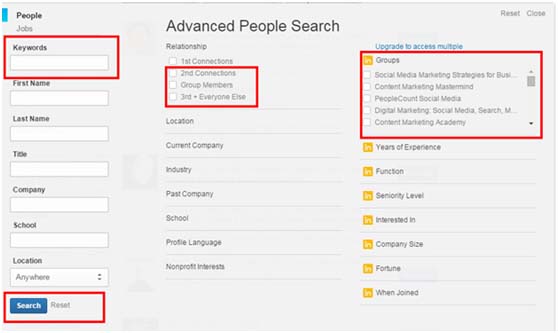
You can search for prospects using keywords, filtering your connection level, identifying your prospects' location, and selecting LinkedIn groups you are a participant of.

Drill down your ideal customer as much as you can. Your goal is to find the people whom you are most likely to do business with. Once you have defined your parameters, you can generate a search by clicking the 'search' button at the bottom.


"Advanced Search" takes one step further by offering Boolean search technology—through the use of 'AND', 'OR' and 'NOT'—to generate highly targeted results. However, you can also use quotation marks (") for your search terms. Experiment with your search to find out which set of results suits you.


After identifying your prospects, you can save your search results 3 times, so make sure to choose keywords and phrases that lead to your most suitable sales leads.

Wednesday, 20 January 2016

How 3 Companies Used Scarcity To Drive Sales Leads

What if I told you two cookies in a jar and ten identical cookies in an identical jar would be valued differently?

In a 1975 study, researchers Worchel, Lee and Adewole wanted to know how people value identical cookies in two identical glass jars. One jar contained ten cookies whereas the other contained two. Which cookies would be valued more?

The results were surprising. While both cookies and the jar were identical, participants in the experiment valued the cookies in the near-empty jar than the full jar.

How 3 Companies Used Scarcity To Drive Sales Leads

Introducing Scarcity And Urgency

Could it be that the scarcity had somehow influenced their perception of value? Things that are scarce make us want something even more if there isn't enough to go around, creating a sense of urgency.

It makes us feel privileged that we could get our hands on the "last few remaining".

What do cookies have to do with creating valuable offers, you wonder?

Scarcity works on this simple principle:

Plenty of stuff – no one wants it
Not much stuff – everyone wants it

Perhaps you've seen something like this.


Source: Booking.com

Or this.


Source: TigerDirect.com

In both examples, companies took advantage of the scarcity principle to dramatically increase the attractiveness of their stated offers.

By deliberately limiting the time or quantity of their offers, their offers were seen as more attractive. Scarcity works because it forces action. Scarcity creates a fear of shortage and motivates urgency.

Potential buyers can't just say, "I'll decide tomorrow", they will have to decide now or miss out completely on a potentially important offer.

Using the scarcity technique, you can influence your prospect's behaviour by changing the fundamental economic rules of supply and demand.

Wondering how to put your new-found knowledge into action? Here are three brilliant examples of scarcity marketing at work.

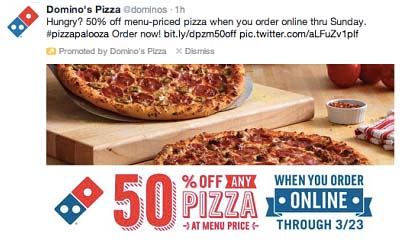
1. Domino's Pizza: Limited Time Offer


Part of its push to make itself known in the mobile ordering space, the pizza chain incentivised consumers to order from smartphones, tablets and desktops with a 50 percent discount during a basketball tournament in the US. The company sold 1.7 million pizzas during the semi-finals.

Key Takeaway: Dominos understood where their target market was and positioned their offer accordingly. They foresaw their consumers were interacting more with their mobile devices while watching television and combined a scarcity marketing tactic on a platform where their target market was at that time.

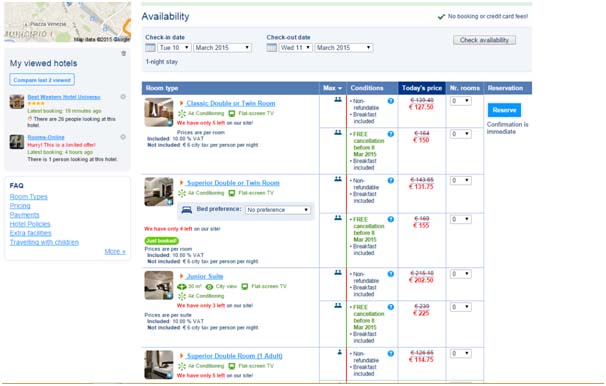
2. Booking.com: Limited Quantity Offer


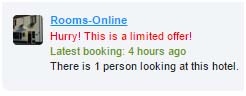
Key Takeaway: Here, popular accommodation website Booking.com makes use of scarcity messages and limited quantity messages marked in RED to create a sense of urgency and get people to book their desired hotel at the first visit.

"We have only X left", "Just booked Y hours ago" and "Z people are looking at this hotel."

These messages are designed to add pressure and get people buying.

Planning a trip and really like the hotel? Book it NOW.

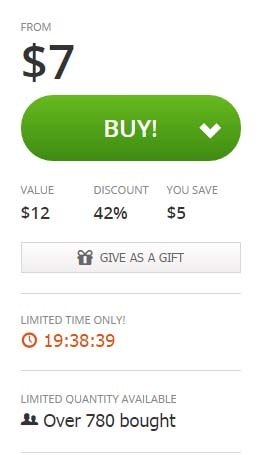
3. Groupon: Limited Time and Quantity


E-commerce marketplace Groupon uses both tactics effectively in their daily deals. Groupon deals end within a certain timeframe and they also limit the number of people who can buy a Groupon.

Key Takeaway: This use of the scarcity principle along with clearly stating the discount's value when consumers bought the deal makes for a powerful combination, explaining why Groupon has been so successful in the e-commerce marketplace.

Ending off, scarcity plays on customer perception of supply and demand to create urgency. It plays on our ever-present "fear of missing out" to drive potential customers to take action NOW.

These are 3 examples of how businesses have used the scarcity principle to make their offers more attractive, hence generating more sales leads and customers! Are you using these techniques in your business's offer pages?

Monday, 18 January 2016

Discover 5 Elements That Make A Headline Magnetic

Ever encountered the following?

You've spent the entire week crafting this amazing ebook offer guaranteed to solve your audience's problems, as part of a new marketing campaign.

With great anticipation, you put the finishing touches on your ebook and release it on the Internet.

You wait for the hits to roll in. Clicks start rolling in, but your conversions remain flat-lined.

Or worse still, no one clicks on your offer.

What could have gone wrong?

Attracting people's attention online takes more than great content and slick design.

Headlines and titles are the most important part of anything you write. A powerful headline convinces people to keep reading and engage with your offer.

Brian Clark, CEO of Copyblogger stresses the importance of a catchy headline, saying, "Each element of compelling copy has just one purpose—to get the next sentence read."

People do judge a book by its cover. HubSpot did A/B testing on a title of an ebook offer to see which title would perform better. They took the original title "The Productivity Handbook for Busy Marketers" and compared results with a revised title "7 Apps That Will Change the Way You Do Marketing".


Source: "The 30 Greatest Lead Generation Tips, Tricks and Ideas", HubSpot

The revised title generated 776% more leads and improved conversion rates from 32.3% to 51.7% compared with the original title.

In short, the title has a significant impact on how attractive or effective your offer is.

So what's the secret behind great titles to hook your reader?

Great titles employ one or more of these elements:

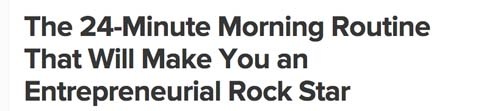
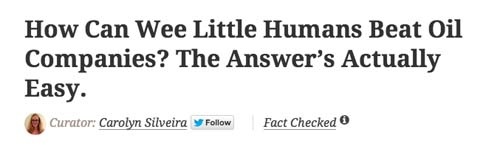
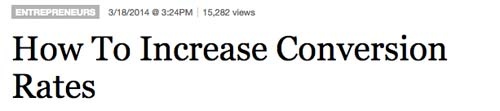
1. Make a promise


Source: Entrepreneur

2. Create intrigue


Source: Upworthy

3. Identify a need


Source: Forbes

4. State the content


Source: Goins Writer

So how do you go about creating these types of magnetic offer titles?

1. Use Numbers

Many ebooks and blog posts use numbers to start off their headlines. People typically remember three to five points, but odd numbers like 13 or 47 can also catch people's attention for being unusual choices. Examples:

HubSpot's "100 Ideas that Changed Marketing"

BuzzFeed's "47 Hilariously Underwhelming Local News Headlines"

2. Use Interesting Adjectives

Examples include:

Effortless
Absolute
Wonderful
Free
Amazing
Essential

Users especially love verbs and adjectives in their headlines.

3. Use Unique Rationale

Consider the following examples in creating original list posts and ebooks:

30 Reasons to Start a Business Right Now
4 Secrets to Writing Killer Blog Content
10 Timeless Lessons from the Wall Street Crash
7 Proven Headlines that Convert

4. Use Trigger Words

Words like 'what', 'why', 'how', 'when' help to persuade readers of the value of your content. Strong headlines include either a trigger word or a number, rarely both.

5. Make A Promise To Your Reader

Are you listening to what your readers want or need? How does your content address these needs? Promise your reader something valuable.

Powerful headlines dare your reader to read your content.

Once the reader is hooked, deliver on what you promised in the headline. People don't want to be tricked into reading something uninteresting. They want to be sent on an exciting journey and take away valuable insights in the process.

The best copywriters can take days to craft the perfect headline. Crafting a headline can often be something we think off the top of our heads but spending more time on your headline can propel your content above your competitors.

Before you publish, ensure the headline grabs people's attention and doesn't let go. And then deliver on what your headline promises.

Saturday, 16 January 2016

Why, What And How To Post On LinkedIn Pulse Strategically

pulse

If you are an avid business blogger, you would have heard of LinkedIn Pulse by now. Pulse is gaining rapid popularity as an eminent content publishing platform. Content marketers would welcome Pulse as an additional channel for content dissemination, but it is not "another channel". Pulse disseminates your articles to all Pulse users (writers and readers) and not just your connections. Moreover Pulse posts are said to achieve rankings in Google News Search.

As LinkedIn has established itself as a business-oriented social network with very active members, you can be sure that your quality articles will pick up the eyeball counts out of the 300 million Pulse users out there!

To get started with Pulse, click to the Home feed of your LinkedIn account, and click "Publish a post".

Now, let's not take these potential 300 million users for granted. Their eyeballs will easily glaze over your article headline or title if it is not click-worthy and compelling. More than that, your entire post must be engaging, which you means you got to demonstrate thought leadership by thinking deeper and writing longer than other writers, especially your competitors. If you are going to write on Pulse regularly, do each article once and do it great, instead of being lacksidal about your work.

The best type of articles to write are those based on personal experience or industry insights or actionable tips. As your readers are fellow business professionals, highly relevant insider information that informs them in their own situation or that is applicable in their work will garner better engagement rates.

Using your articles to continually engage readers in a conversation is a great form of brand building. More than that, your Pulse post could get you linked up with other professionals who can open doors of business opportunities for you. This is not something that is remotely possible in other social networks. It is a good idea to stress a final call-to-action whereby you encourage readers to connect with your LinkedIn profile or follow your Company Page to learn more about you and your business.

As you can see, getting started on LinkedIn Pulse is as easy as clicking "Publish a post", but the benefits of using it is manifold. There is no place better than LinkedIn where you can:

1. Reach an interested audience,
2. Grow your network,
3. Train yourself to write better,
4. Build up your brand and credibility, and
5. Create fresh business opportunities

All at the same time!

Friday, 15 January 2016

This Company Changed One Thing And Got A 620% Increase In Conversion Rates

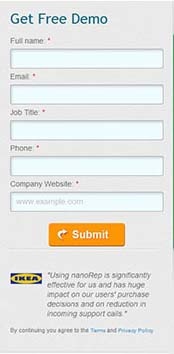
Let's have a look at a typical landing page form.


Image Source: Unbounce

Everything looks good. You've filled in your personal information and are ready to go...

Until your eyes reach the bottom.

"Submit," the bright orange button coldly says.

"Hang on, what am I submitting to? It doesn't say anything and I'm too lazy to dig around for more information."

Your visitor hesitates and leaves your page, losing you a potential hot lead.

"Submit" implies you didn't bother to change the default text on your form template.

"Submit" is bland, even intimidating.

Does your business want to be seen as bland or intimidating?

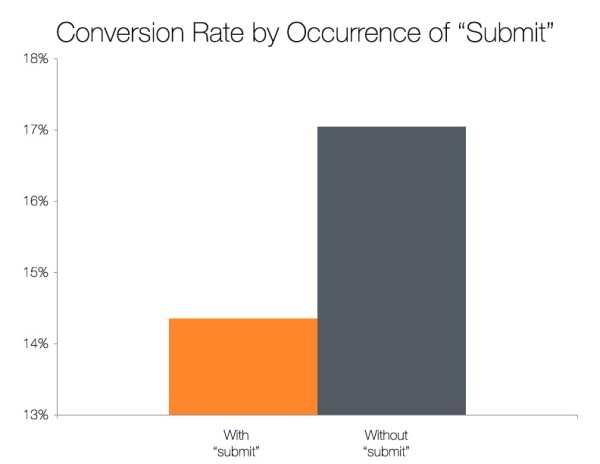
When it comes to professional landing pages, the smallest details can make a huge difference. According to HubSpot Singapore's analysis of over 40,000 HubSpot customer professional landing pages, call-to-action buttons labelled "submit" performed 3% worse than buttons without a "submit" label.


Image source: HubSpot Singapore

If submit is so bad, what are better words to use?

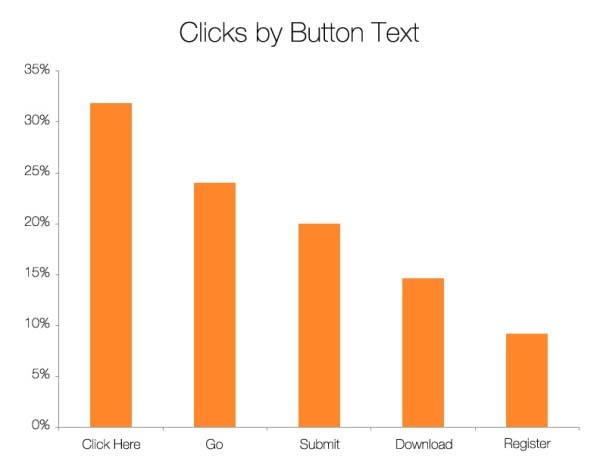
A subsequent context-less word preference test done with 400 people by HubSpot Singapore revealed people preferred words suggesting less investment of time and effort. "Click Here" and "Go" were the most favoured, whereas words like "Download" and "Register" fared the worst.


Image source: HubSpot Singapore

These words still sound a little generic, don't they?

Personalisation of your call-to-action to your offer is the best approach.

People generally fear the unknown and want to know why they are being asked to do something. Visitors want to know what they will get in return for giving you their personal information.

So how can your call-to-action button aid this process of converting visitors into sales leads instead of distracting?

Ensure your call-to-actions are clear and answer these 2 concerns: 'what' and 'why'. Clearly communicate the benefits your lead is getting in return when they click on your call-to-action.


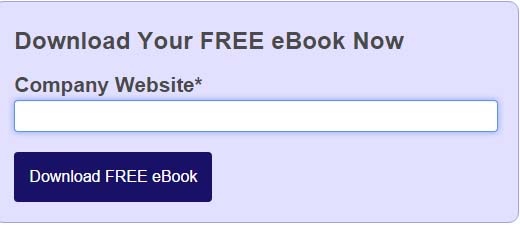
On our website, our call-to-action button copy clearly states the benefit you will receive when you click on the button (a free e-book).

In another example, PriceCharting.com observed an astounding 620.9% increase in click-through rates when they changed their call-to-action button copy from a generic 'Download' to a clearer and more relevant 'Price Guide' (read more of the PriceCharting.com case study here).

Ensure every element of your professional landing page to help communicate how the user benefits from your offer, including your call-to-action. Small tweaks can result in the biggest improvements in conversion rates.

Thursday, 14 January 2016

3 Ways You Can Use Social Proof To Generate Sales Leads

As a marketer, you believe in your product. You want to tell everyone how amazing your product or offer is.

But if you were to tell others why your product was amazing, they might think you were either egoistic or have a hidden agenda.

Now what if instead of you telling them how amazing your product is, someone else did? (And you didn't pay them for it.)

Opinions of others are one of the key influences on a person's decision-making process. 70% of consumers look at product reviews before making a purchase, and product reviews are 12x more trusted than product descriptions from manufacturers (source: Fast Company).

In short, people are looking for others to tell them what they should do, buy or think.

How do you leverage customers and subscribers who think your product/offer is amazing by turning them into spokespersons for your business?

1. Feature Customer Testimonials

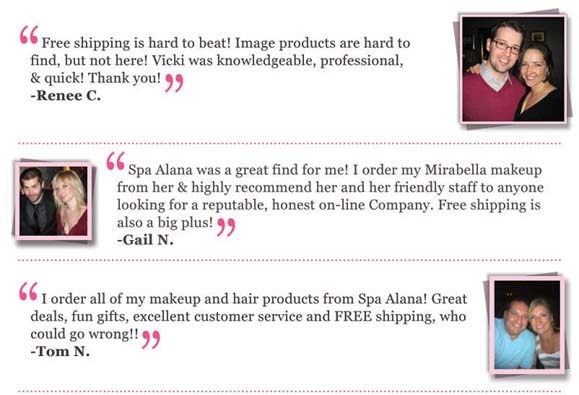
Featuring short stories from happy customers does wonders in generating pre-qualified leads. Place customer quotes beneath your landing pages to persuade undecided visitors. Placing a face to the words will also help boost the credibility of your testimonials.

Stories of how the product turned a customer's life around or delivered measurable results would make for a persuasive and trustworthy form of social proof for your business.


Image source: e-Commerce

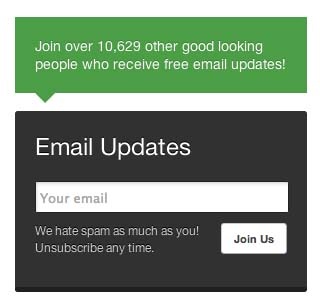
2. Display Number of Subscribers In The Opt-In Box

Are your visitors unsure about you and your brand? Promote the number of subscribers and social shares you have. Approval from large groups of people taps on a visitor's compulsive concern that one might miss out on an opportunity.

However, this technique is only useful if you already have a sizable following. Pages with fewer subscribers or social shares can be seen as less trustworthy and backfire. In this case, it's better to leave out numbers till you have more followers.


Source: Marketing Land

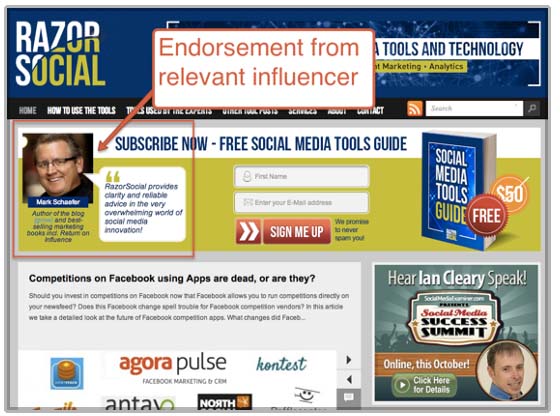
3. Featuring Expert Endorsements

Industry experts and thought leaders' endorsements have significant influence on undecided visitors. If your brand has gotten an endorsement from a well-known and respected person in your industry, make sure you feature it prominently!

Adding a high-quality picture of the endorsing person will help enhance the power of this social proof.


Image source: Unbounce

Effective use of social proof can influence potential customers to choose your brand over your competitors. Positive reviews and endorsements will help to increase your credibility with other prospects, thereby improving both the quantity and quality of the sales leads generated!

Tuesday, 12 January 2016

Why HubSpot Is Beneficial To Your Business

Why Is HubSpot Beneficial To Your Business
There are many marketing automation software to choose from, so why HubSpot?

HubSpot is globally well-known for its flagship marketing automation software that goes by the same name. It is all-in-one, containing all the modules a business needs to market itself, including a blogging platform, email marketing tools, website design and management tools, search engine optimization module, keyword research module, social media management tools and analytics.

HubSpot has an intuitive, user-friendly control panel that allows you to edit your website, add new blog posts and publish new social media content. All of these tasks can be accomplished with one login and one set of options from the same dashboard. This feature will save you noticeable time that you would have otherwise spent on using multiple login pages for your website and various social profiles.

HubSpot goes beyond providing the software to offer its clients a full range on Inbound certification programs to ensure that they know how to operate the software, and the programs are FREE even as the educational material rivals any online marketing courses in Singapore.

I'd highly encourage you to take 14 minutes to click the 2 links below and watch 2 overview videos on all the great features of Hubspot. It's great to visually see how the tool works. Seeing everything in action is way easier to understand than reading about it.

What Is HubSpot? | Demo Of HubSpot

Sunday, 10 January 2016

5 Major Benefits Of Inbound Marketing

5 Major Benefits Of Inbound Marketing

You may ponder, "Will Inbound Marketing in Asia work for me? How effective it is to my business?" Results will vary on case-by-case basis, but across the board, satisfied practitioners have reported enjoying the following 5 benefits.

Benefit 1: It simplifies and clarifies marketing and sales processes

The end-to-end B2B lead generation, nurturing and qualification process is structured and process-oriented due to customizable, conditional settings within the HubSpot marketing automation software, so that the statistical data (analytics) becomes clear-cut and easily interpreted for decision-making.

Benefit 2: It increases online visibility, credibility and brand awareness

Inbound Marketing has empowered businesses of all sizes to publish value-adding content and to map their content to the appropriate buyer personas so that the right kind of targeted visitors will come to their websites through online search. Overtime, businesses will be viewed as credible experts based on the content they publish.

Benefit 3: It generates quality traffic and B2B sales leads

As businesses publish more content that helps to answer the concerns of prospects, prospects will feel more comfortable and inclined to revisit. Lead nurturing enables businesses to steer prospects through their buyer's journey towards making a purchase decision, thus leading them down the path towards sales conversion.

Benefit 4: It increases engagement, build long-lasting relationships and bring in new business

Interactive on-site elements and social media have empowered businesses to become pro-active at communicating with visitors and B2B sales leads. Every opportunity to offer insights, tips, suggestions, and answers to prospects' questions is a great moment for businesses to maintain a top-most presence in the minds of prospects, so prospects know who to look for should problems crop up, and finally, when they decide to make a purchase.

Benefit 5: It is cost-effective

As Inbound marketing is a highly targeted digital marketing process, businesses are able to maximize their marketing budget for every lead generated. In fact, Inbound marketing costs 60% less than traditional marketing for at least the same results achieved, thus it gives a better ROI through greater lead conversions and lower costs.

Inbound Marketing is the future of lead prospecting and sales conversion, and the future is now. With these 5 major benefits in mind, and as certified Inbound marketers, we are confident that we can design or redesign your digital marketing strategies to help you achieve your marketing objectives.

Thursday, 7 January 2016

4 Top Search Ranking Factors To Pay Attention To

4 Top Search Ranking Factors To Pay Attention To

There is no shortage of advice as to what folks must do to better a blog post's position in the search engine listings.

Certain people agree, certain people differ, and some people are out-and-out puzzling.

According to the consensus views of the Singapore SEO experts, these are the 4 top search ranking factors.

Targeted Keywords in the Title

The use of targeted keywords in the title is extremely important. It does not only promote better ranking, it also helps with better click-through from the search engine listings to the post. It is of little use to be high up in the search results and not receive that many clicks. The primary goal should be to get as many targeted visitors to your site as possible.

Those keywords that the searcher used are highlighted in bold in the search results. When the right key phrase of your title is highlighted, it stands a higher chance of being seen and receiving that mouse click. However, highlighted keywords don't comprise the only element to think about when composing the title.

A smartly crafted page title, that invites and entices the searcher to click through, can give you a lot of extra clicks. It is more advantageous to receive a hundred clicks from listing number 5 through having an eye-catching title compared with fifty clicks from the third listing with a badly written title, wouldn't you agree?

Meta Description (In the case of WordPress, this is called an 'excerpt')

The meta description is a 150-character snippet used to summarize a web page's content. Search engines use these snippets in search results to let visitors know what a page is about before they click on it. Therefore it is such a crucial element that without putting effort into crafting your meta descriptions, you could be missing out on good website traffic that can bring in lots of new leads and customers via good click-through rates from organic search.

A great meta description is clear and convincing. You can use an action-oriented language that tells readers exactly what they can do if they click, with words like "Learn," "Discover," or "Grab,", and follow it up with specifics of what exactly they will get if they click.

Or you can summarize a key benefit or solution which would be reason enough to click through and read your post. In other words, you are telling your readers why they should read your content.
The meta description also shows up when you share or bookmark your post on social sites, so one way or another, if you want more readers to read your content and gain something out of it, you can't do without it.

The Global Link Popularity of the Website

The number of hyperlinks that are pointing to a website is used by the search engines to calculate the importance of the website. They take into account both the quality and quantity of the links.

It goes to imply that link building is a never-ending endeavor.

One can never have enough backlinks pointing to your site. However, it is also true that one cannot build backlinks too fast and that could trigger some red flags with the search engines.

However, if performed as an ongoing action with a longer term outlook, every link is worth the resources spent in getting it. They all add up to a higher deemed importance of your website.

I would rather recommend that the digital marketer not dwell too much on accumulating how many backlinks in a day or a week, but to focus on creating valuable content that encourages readers to share to their connections, and apply viral marketing strategies to propel the momentum.

Also, in the course of backlinking, external websites will naturally use a certain set of keywords and phrases as anchor text for a link. These anchor texts are saying what your website or blog is about, therefore what topic or theme your site is focused on will define what keywords it will rank for in the search engine listing.

The best way to exert influence in any way the anchor texts that other websites use with their links to your site, is to continually do keyword research to narrow down to a few major specialized topics, identify the long-tail keywords that are relevant to the business, and frequently emphasize and include them in your content to drive extremely targeted traffic to your posts or web pages.

Link Popularity in the Site's Internal Link Structure

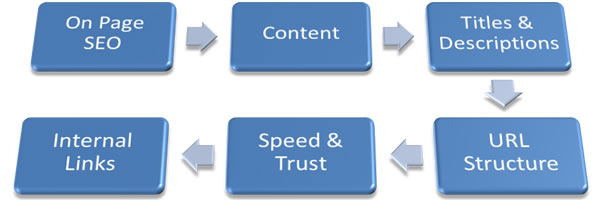
Contrary to what most webmasters think, and despite what is being said above, search engines do not rank whole websites; they rank individual web pages. In most cases, the home page receives the bulk of inbound links. You may have actual income-generating pages that you'd aim to rank high in the search engines, but they do not get sufficient external links. Internal linking—and the anchor text used for the internal links—is the way to distribute PageRank to other pages of your site. To an extent, this will help to build up search engine trust factor for the intended page so that it can have better search engine ranking.

Some SEO professionals say that an internal link has the same value as a link from an external page. That doesn't mean your website will rank by having only internal links.

What it does mean is that you can cause a page to be ranked by having internal links pointing to it even though it does not have lots of external backlinks, on the condition that the rest of the site has accumulated sufficient PageRank from external backlinks.